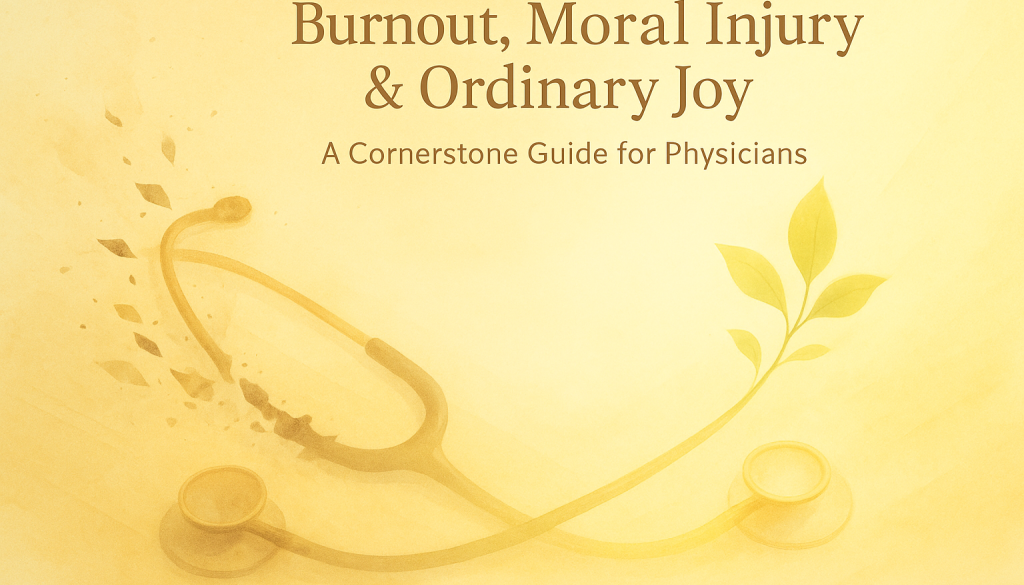
Physician Burnout, Moral Injury & Ordinary Joy
Originally published January 2026 · Updated April 2026
As physicians, we are trained to push through, to prioritize patients, and to normalize high stress. That works for a while — until it doesn’t.
This hub brings together what I teach physicians in coaching: how to name burnout clearly, how to recognize moral injury when the system works against you, and how to rebuild with ordinary, sustainable joy.
I am Dr. Ben Reinking, pediatric cardiologist and physician development coach. This is your starting point.
The three concepts in brief: Burnout is depletion — too many demands, too few resources, chronic exhaustion. Moral injury is something different: the distress of knowing the right course of action and being blocked by the system from taking it. Ordinary joy is the antidote that most physicians overlook: not grand vacations or career overhauls, but small, regular experiences that restore your humanity and your capacity to keep going.
The direct answer: If you feel exhausted, cynical, or like something is fundamentally wrong with how medicine feels right now, you are not broken. You are responding rationally to a system that chronically demands more than it provides. This hub will help you name what is happening, understand why it is happening, and find the specific path that fits your situation.
Schedule a Physician Growth Consult →
What Is Physician Burnout?
Burnout in medicine is more than being tired. It is a recognized pattern of emotional exhaustion, depersonalization or cynicism, and a sense of reduced personal accomplishment that develops when job demands chronically exceed the resources available to meet them.
Common drivers for physicians include:
- Excessive clinical workload and RVU expectations that leave no margin
- Documentation and EHR burden that routinely extends into personal time
- Loss of autonomy in clinical decision-making
- Administrative friction and institutional metrics that conflict with patient needs
- A professional culture that expects physicians to absorb systemic dysfunction without complaint
Unaddressed burnout degrades patient care, damages team relationships, and quietly erodes a physician’s ability and desire to remain in medicine.
Related reading: How marginal gains can reduce charting time · Physician wellness is not selfish · Physician burnout: 9 driving factors
What Is Moral Injury — and How Is It Different from Burnout?
Moral injury occurs when you know what the right or best care is, but something blocks you: cost, policy, productivity pressure, staffing shortages, or insurance restrictions. Rather than simple exhaustion, it feels like a violation of your professional or personal values.
Signs you may be experiencing moral injury:
- “I know what this patient needs, but I cannot get it for them.”
- “I am being asked to prioritize volume over the quality of medicine I was trained to practice.”
- “I am carrying guilt for a problem the system created, not me.”
The distinction matters for treatment. Burnout says, “I have nothing left.” Moral injury says, “I cannot practice the way I know is right.” Many physicians experience both simultaneously, which is why rest alone rarely resolves the deeper dissatisfaction.
Addressing moral injury requires more than recovery time. It requires naming the constraint clearly, reclaiming agency wherever possible, and sometimes redesigning your role from the inside out.
Related reading: Moral injury in physicians: a deeper dive · Core values and value misalignment in medicine · Burnout is not a failure: it’s a fork in the road
Why Ordinary Joy Matters
The fastest path to making medicine feel lighter is rarely a sabbatical or a career change. It is rebuilding a reliable rhythm of ordinary joy: small, frequent experiences that remind you that you are a whole human being, not only a physician.
For most physicians, ordinary joy looks less dramatic than they expect:
- Weekly family dinners that do not get interrupted by charting
- Ten minutes with your dog or in your garden between clinic and the drive home
- A workout on the calendar, treated like a patient appointment
- Reading something that is not a clinical guideline
These moments do not fix a broken system. But they restore the mental and emotional capacity you need to push for better conditions, have harder conversations, and sustain a long career without disappearing into it. They also directly counteract the perfectionism and social comparison that quietly fuel burnout.
Related reading: The neuroscience of gratitude for physicians · Rediscovering joy after physician burnout · Fulfillment for physicians: rediscovering your “why”
A Practical Framework: From Burnout to Ordinary Joy
Step 1: Name What Is Really Happening
Is this exhaustion and cynicism (burnout)? A values conflict the system created (moral injury)? Or both? Naming it accurately keeps you from applying the wrong solution, like working harder on resilience when the problem is structural.
Step 2: Reclaim Agency Where You Can
Small, deliberate wins accumulate meaningfully: tighter visit templates, batched message times, dictation instead of typing, strategic delegation, and simple boundary statements like “I do not check the portal after 7 PM.” These are not small compromises. They are the marginal gains that give you back time and attention.
Step 3: Rebuild Joy on Purpose
Schedule ordinary joy the way you schedule patient care. If it is not on the calendar, the system will fill that time without asking. Connect your joy practices to your strengths — if human connection energizes you, make sure connection is a designed element of every workday, not a byproduct if time allows.
Step 4: Get Support
Burnout and moral injury resist solo solutions. Coaching, mentorship, and peer community give you structure, accountability, and perspective. A coach helps you separate what is yours to change from what belongs to the organization — and helps you build a plan that moves you from coping to thriving.
Frequently Asked Questions
What is the difference between physician burnout and moral injury?
Burnout is primarily about depletion: chronic demand exceeding available resources, producing exhaustion, cynicism, and reduced effectiveness. Moral injury is about conscience: the distress of knowing what is right and facing a system that blocks you from doing it. Both are serious, both are common in medicine, and many physicians experience them simultaneously. They require overlapping but distinct interventions.
Can I recover from burnout without leaving medicine?
Yes, and most physicians want to. The majority of burned-out physicians still find meaning in patient care. What has eroded is the structural support to practice sustainably. Many physicians stay in medicine by redesigning their role, setting firmer boundaries, building ordinary joy practices, and working with a coach to navigate the system more strategically.
What are some quick wins I can try this week?
Batch your charting into two defined windows instead of reacting continuously. Define one “no portal” period at home and hold it. Schedule one genuinely joyful activity and treat it as non-negotiable. Have one honest conversation with a colleague about how the current system is affecting your work.
How does physician coaching help with burnout?
Physician coaching provides a structured space to think clearly about what is happening, name what belongs to you versus the system, practice difficult conversations before having them, and build a 60 to 90 day plan that moves you from survival mode toward genuine sustainability. It addresses both the practical and the psychological dimensions of burnout.
What does “ordinary joy” mean for a physician?
Ordinary joy is a term used at The Developing Doctor to describe the small, regular, non-clinical experiences that restore a physician’s sense of being a full human being, not just a role. It is not about grand gestures or time off. It is about protecting a daily rhythm of connection, rest, creativity, or play that reminds you who you are beyond the white coat.
Hub: All Burnout, Moral Injury & Joy Posts
This cornerstone page links to the full collection of related content on The Developing Doctor:
Burnout:
- Physician burnout: 9 driving factors
- Burnout is not a failure: it’s a fork in the road
- How to combat physician burnout
- Strategies for avoiding physician burnout: a comprehensive guide
- Physician burnout solutions
- Healthcare provider burnout and self-care
- Burnout and healthcare system transformation
Moral Injury:
Joy & Fulfillment:
- Rediscovering joy after physician burnout
- Fulfillment for physicians: rediscovering your “why”
- The neuroscience of gratitude
- Life lessons for physicians
Coaching & Next Steps:
- Physician burnout coach: what it is, what it costs, and how to tell if you need one
- Why physician coaching is the tool you need
- Finding clarity: physician coaching vs. therapy
Resources
- Watch: How to make charting 15 minutes faster using marginal gains
- Read: Gratitude practices that actually fit a doctor’s day
- Course: Mastery & Wellness — How to Thrive as a Physician
Ready to Move From Coping to Thriving?
You do not have to wait until you are completely burned out to make medicine sustainable again. Most physicians who come to coaching wish they had started sooner.
About the Author Dr. Ben Reinking is a practicing pediatric cardiologist, certified physician coach, and founder of The Developing Doctor. After navigating his own experience with burnout, he now helps physicians at every career stage name what is happening, rebuild agency, and design careers that are both excellent and sustainable. He serves as division director and has held roles as fellowship director and learning community director at the University of Iowa. Learn more at thedevelopingdoctor.com.