
Effective Study Strategies for Medical Students: From Struggling to Thriving
My Medical School Struggle: A Personal Story
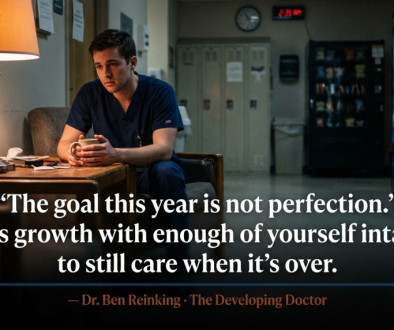
It has been nearly 30 years since I started medical school, but I remember my first semester well. As someone who struggled initially as a first-year student, I can relate to the overwhelming feeling many first-year students experience right now. Trust me — I have been there. I thought I could power through using the same memorize-and-cram technique that worked in college. I was wrong. Because of the sheer volume of information, there simply were not enough hours in the day for that approach. After barely scraping by my first semester, I realized I needed to learn more effective study strategies.
Now, as an experienced physician and medical educator, I have seen countless students face similar challenges. Here are the study strategies for medical students that actually work. These will help you survive and thrive.
The direct answer: The most effective study strategies for medical school share three features: they are active rather than passive, they use spaced repetition to build long-term retention, and they prioritize understanding over memorization. Cramming, passive reading, and re-reading notes are efficient ways to feel productive while learning very little. The strategies below work because they require your brain to retrieve and apply information rather than simply encounter it.
Active Learning: The Foundation of Medical School Success
Passive reading and listening will not carry you through medical school. The volume of material you face makes that approach mathematically impossible. Actively engaging with the material is the most reliable way to retain what the curriculum throws at you.
Effective active learning techniques include:
- Practice Questions: Regularly work through practice questions to test knowledge and identify gaps. The goal is not to see the right answer but to retrieve it — retrieval strengthens memory in ways that re-reading cannot. UWorldis a widely used and highly effective resource.
- Teach Others (the Feynman Technique): Explain concepts to peers or talk through material to an imaginary audience. Teaching forces you to simplify complex ideas and immediately surfaces the gaps you did not know you had.
- Flashcards with Spaced Repetition: Create and review flashcards using a spaced repetition system like Anki. Spaced repetition schedules review at the optimal moment before forgetting occurs, building durable long-term memory far more efficiently than massed practice.
Maximizing Resources: Textbooks, Online Tools, and Study Groups
The range of resources available to medical students today is remarkable. Take advantage of them — but do not let resource-hunting become a substitute for studying.
- Textbooks and Review Books: With so many online resources available, books sometimes get overlooked. They should not. Textbooks provide the in-depth conceptual explanations that video content and question banks rarely match for genuinely tricky material.
- Online Resources: Websites, videos, and interactive modules offer valuable explanations and visual aids. The challenge is accuracy and time. Ask senior students what they recommend, find two or three sources you trust, and stick with them. The time spent searching for better resources is time not spent learning.
- Study Groups: The old adage in medical education, “see one, do one, teach one,” has persisted because it works. Hearing material from different perspectives deepens understanding, and teaching it to someone else is one of the most powerful retention techniques available.
- Office Hours: Faculty office hours exist for one reason — to support you. Stop in, send an email, attend a review session. Every faculty member wants you to succeed.
Time Management: Building a Schedule That Works
Cramming worked in college because even a busy college student has more unstructured time than a medical student. Medical school eliminates that buffer. There is too much material and too little time. A deliberate, consistent schedule is not optional — it is the infrastructure that makes everything else possible.
The most successful students I have worked with manage their time exceptionally well. Practical tips:
- Set specific, protected times for studying different subjects.
- Schedule breaks — they prevent burnout and improve consolidation.
- Build in both focused new-material sessions and review sessions.
- Treat the schedule as a commitment, not a suggestion.
Flexibility: Adapting When Something Is Not Working
If a study method is not producing results, change it. The principle behind this is simple: repeating the same ineffective approach while expecting a different outcome is a trap. What works for one person or one course may not work for another. Experiment deliberately, evaluate honestly, and adapt.
Beyond Grades: Embracing a Growth Mindset
None of my patients have ever asked about my biochemistry grade or board score. They care whether I understand, apply, and explain medical information in a way that benefits them. Grades and board exams matter — but no evidence links test scores directly to clinical performance. Focus on genuine growth and understanding. A growth mindset sustains motivation and resilience through the years of training that remain after any single exam.
Grades are not a measure of your worth.
Advanced Evidence-Based Techniques
When you need to break a rut or deepen your approach, these techniques have strong research support:
- Spaced Repetition: Review material at systematically increasing intervals to build long-term retention. Anki automates this.
- Pomodoro Technique: Work in focused 25-minute intervals followed by a short break to maintain concentration across long study sessions.
- Mind Mapping: Create visual representations of complex topics to understand the relationships between concepts rather than treating them as isolated facts.
Self-Care Is Part of the Study Strategy
Delaying gratification is common in medicine. Do not wait to take care of yourself. Regular exercise improves cognitive function and stress management. Sleep is non-negotiable for memory consolidation. Eat. Call your mom. Watch something you enjoy. Schedule time for the things that make you human — they are not distractions from medical school, they are what make sustained high performance possible.
The Long View
Becoming a doctor is a marathon, not a sprint. Facing constant grading makes it challenging to focus on growth rather than performance — but the physicians who build the best long careers are the ones who kept learning after the grades stopped mattering. View each assessment as a progress marker and a diagnostic tool, not a verdict on your potential.
Embrace the journey. With the right strategies and mindset, you are building toward something extraordinary. You have got this.
Need more personalized guidance on studying in medical school? Schedule a free coaching consultationwith Dr. Ben Reinking — medical educator, fellowship director, and physician coach.
Frequently Asked Questions
What is the most effective study strategy for medical school?
Active retrieval — specifically spaced repetition combined with practice questions — consistently outperforms passive methods in research on medical student learning. The core principle: your brain strengthens memories through retrieval, not through re-exposure. Anki for spaced repetition and a strong question bank like UWorld for active practice form the backbone of the most effective medical school study systems.
How many hours should medical students study each day?
Research on deliberate practice suggests that quality matters more than raw hours. Most successful medical students study four to eight focused hours daily during preclinical years, adjusting based on exam timing and course demands. Unfocused study for twelve hours produces worse outcomes than focused study for six. Schedule breaks, protect sleep, and treat recovery as part of the study plan.
Is cramming ever effective in medical school?
Rarely and briefly. Cramming can improve performance on an exam the following day but produces almost no long-term retention. In medical school, where material builds cumulatively and board exams test two or more years of content, cramming actively works against you. The volume of information simply exceeds what short-term memory can hold — which is why spaced repetition exists.
How do medical students balance studying with mental health?
By treating self-care as a clinical necessity rather than a reward for finishing. Build exercise, sleep, and genuine recovery time into your schedule with the same discipline you apply to studying. Use your program’s mental health resources proactively, not reactively. And recognize that struggling in medical school is normal — the students who succeed are not the ones who never struggled, they are the ones who asked for help when they needed it.
About the Author Dr. Ben Reinking is a practicing pediatric cardiologist, certified physician coach, and founder of The Developing Doctor. He struggled his first semester of medical school and has spent nearly two decades helping students learn more effectively than he did. As a former fellowship director and medical school learning community director at the University of Iowa, he brings both personal and institutional experience to every conversation about medical education. Learn more at thedevelopingdoctor.com.
Updated April 2026