Emotional Intelligence: A Physician’s Guide
Every physician has experienced this situation at least once.
Something happens that is beyond your control — a scheduling error, a prior authorization denial, an angry patient at the front desk — and the proposed solution is: “I’ll talk to the doctor.”
Suddenly, it is your job to solve a problem you did not create.
I find these scenarios challenging because they occur when I am already multitasking, and resolving the issue takes both time and emotional bandwidth. When I first started practicing, situations like this routinely got the best of me. With experience and coaching, I have learned to handle them more effectively — by managing my own emotions and responding to the emotions of others with skill rather than reactivity.
That skill is emotional intelligence, and it is vital for physician success.
Emotional intelligence (EI) is the ability to recognize, understand, and manage one’s own emotions, as well as to understand and influence the emotions of others. For physicians, developing strong EI is not just beneficial — it is increasingly essential for patient care, professional relationships, leadership effectiveness, and career sustainability.
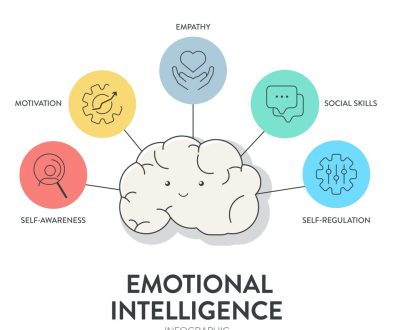
The direct answer: The four core pillars of physician emotional intelligence are self-awareness, self-regulation, empathy, and social skills. Research links higher EI in physicians to better patient outcomes, lower burnout rates, stronger team dynamics, and greater career satisfaction. EI is a learnable skill that improves with deliberate, consistent practice.
For the broader case for why emotional intelligence matters across healthcare teams, see our companion post: Emotional Intelligence in Healthcare.
The Four Pillars of Physician Emotional Intelligence
- Self-Awareness: Recognizing and understanding your own emotions, strengths, limitations, values, and impact on others. For physicians, self-awareness means being able to monitor your emotional reactions during high-pressure situations — catching the moment when frustration, fear, or exhaustion is about to drive a decision — and recognizing when you need support before the need becomes a crisis.
- Self-Regulation: In other words, the ability to control or redirect disruptive impulses and moods, and to adapt thoughtfully to changing circumstances. Physicians with strong self-regulation can remain calm under sustained pressure and respond deliberately to challenging situations with patients or colleagues rather than reacting in ways they later regret.
- Empathy: The capacity to understand the emotions of others and to respond to people according to their emotional state, not just their stated words. Empathy allows physicians to connect with patients at a human level, producing better communication, stronger therapeutic relationships, and meaningfully improved clinical outcomes.
- Social Skills: Proficiency in managing relationships, navigating conflict, and building effective networks and teams. For physicians, strong social skills enable genuine collaboration with colleagues and the ability to lead and influence teams through complexity and disagreement.
How Emotional Intelligence Benefits Physicians
Emotional intelligence helps physicians build community, relate to colleagues, and find career satisfaction in concrete, measurable ways:
- Building community at work: Emotionally intelligent physicians create more positive work environments by recognizing and responding to their team members’ emotional needs. They foster cultures of open communication and mutual support, producing stronger professional relationships. Sharing your own emotions with colleagues — appropriately and selectively — normalizes open communication and makes it easier for others to do the same.
- Relating to colleagues: Physicians with high EI navigate interprofessional relationships more effectively by deploying empathy and social awareness. They are better equipped to handle conflict constructively, give and receive feedback without defensiveness, and collaborate on complex patient care across different disciplines and roles.
- Career satisfaction and reduced burnout: EI helps physicians manage stress, build resilience, and maintain a sustainable relationship with their work. Self-aware physicians recognize their own needs and limitations, leading to better self-care and meaningfully reduced burnout risk. Research consistently shows that emotionally intelligent physicians find greater satisfaction in patient interactions and report lower rates of emotional exhaustion.
Emotionally intelligent physicians are also consistently perceived as more effective leaders — which creates opportunities for career advancement, institutional influence, and the kind of mentorship relationships that sustain a long career in medicine.
How Physicians Can Improve Their Emotional Intelligence
EI is not fixed. It responds directly to deliberate practice. Here are five evidence-based approaches that integrate realistically into a physician’s schedule:
- Meditate: Even 10–15 minutes of daily mindfulness practice has been shown to improve self-awareness and emotional regulation. The goal is not to empty your mind — it is to practice noticing what is happening internally without immediately reacting to it.
- Keep a Journal: Writing down emotional responses to daily events builds self-awareness and, when you also consider others’ perspectives, deepens empathy. Even three or four sentences at the end of a shift creates the reflective distance that emotional growth requires.
- Seek Feedback: Colleagues and patients notice things about your communication and interpersonal style that you cannot see from inside your own perspective. Actively requesting specific feedback — from peers, mentors, or a coach — reveals blind spots and areas for growth that self-reflection alone misses.
- Practice Difficult Conversations: Physicians work deliberately on clinical skills — procedural competence, diagnostic reasoning, therapeutic knowledge. Apply the same deliberate practice to communication. Role-playing difficult conversations with a peer or coach before having them in real time builds both confidence and skill.
- Use the RULER Framework: The RULER method — Recognize, Understand, Label, Express, Regulate — is an evidence-based approach to emotional intelligence developed by Yale’s Center for Emotional Intelligence. Incorporating this framework into how you process and respond to emotional situations has been shown to improve EI on healthcare teams and increase professional satisfaction over time.
The Bottom Line
Developing emotional intelligence is one of the highest-leverage investments a physician can make in their own career, their clinical relationships, and their long-term sustainability in medicine. By focusing on self-awareness, self-regulation, empathy, and social skills — and practicing them deliberately — physicians can find deeper satisfaction in their work, build stronger teams, and provide the kind of care that drew them to medicine in the first place.
Want to build your emotional intelligence with structured, personalized support? Schedule a free coaching consultation with Dr. Ben Reinking. Physician coaching is one of the most effective ways to develop the EI skills that medical training never taught — and that your career increasingly requires.
Frequently Asked Questions
What is emotional intelligence and why does it matter for physicians?
Emotional intelligence is the ability to recognize, understand, manage, and respond effectively to emotions — your own and others’. For physicians, EI matters because medicine is fundamentally relational. Every patient interaction, team collaboration, and leadership moment is shaped by emotional dynamics. High EI physicians manage stress more effectively, communicate more clearly, build stronger therapeutic relationships, and sustain their careers longer with less burnout.
Can physicians actually improve their emotional intelligence?
Yes — consistently and measurably. Unlike personality traits, EI responds directly to deliberate practice. The four core domains (self-awareness, self-regulation, empathy, social skills) all improve with structured reflection, feedback, and coaching. Research on EI training in medical settings shows significant gains with relatively modest time investment. The keys are consistency and engagement rather than one-time seminars.
How is emotional intelligence different from intelligence or clinical skill?
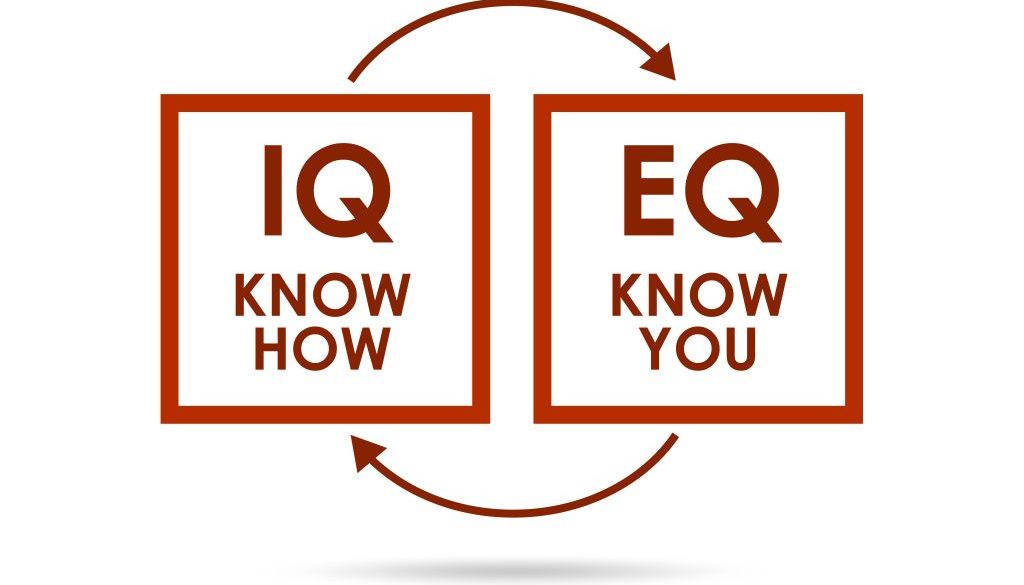
Clinical intelligence (IQ) and technical skill are primarily cognitive — they measure knowledge and procedural competence. Emotional intelligence is relational and emotional — it measures how effectively you navigate the human dimensions of medicine. Both matter, and they are largely independent: high clinical competence does not predict high EI, and vice versa. The most effective physicians tend to develop both.
What is the RULER method for emotional intelligence?
RULER is a framework developed by Yale’s Center for Emotional Intelligence. RULER stands for Recognize, Understand, Label, Express, and Regulate. There are the five core skills of emotional intelligence. It provides a practical sequence for processing emotional situations. First, notice what you are feeling. Next, understand its cause and impact, Third, name it precisely. Finally, communicate it appropriately, and regulate your response. Research on RULER in healthcare settings shows consistent improvements in team EI and individual professional satisfaction.
About the Author Dr. Ben Reinking is a practicing pediatric cardiologist, certified physician coach, and founder of The Developing Doctor. Emotional intelligence is one of the core competencies he coaches. It is the skill that medical training under develops and that sustained clinical excellence most requires. Learn more at thedevelopingdoctor.com.
Updated April 2026